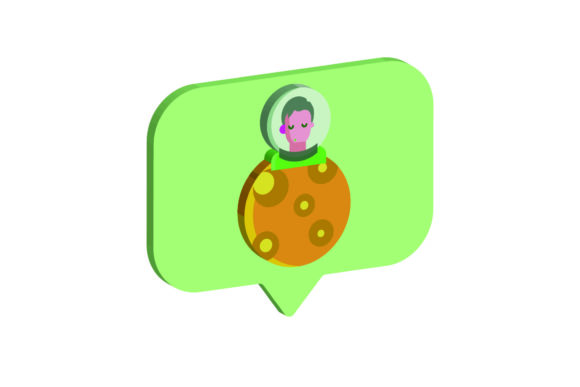
Unlocking the Potential of 3D Icon Space Moon and Astronaut Assets for Modern Design Projects
The digital landscape is increasingly visual, with creators across various sectors seeking high-quality graphical assets to enhance their communication. Among the most popular themes in modern graphic design is space exploration, evoking feelings of discovery, innovation, and future-forward thinking. A specific asset that has gained significant traction among designers and content creators is the 3D Icon Space Moon and Astronaut. This particular design element serves not just as a decorative image but as a versatile tool capable of elevating branding, educational materials, and marketing campaigns.
Understanding the technical specifications and practical applications of such assets is crucial for maximizing their value. When you acquire a comprehensive package like the one described below, you are not just receiving an image; you are gaining a complete workflow solution designed for efficiency and adaptability. This article explores the components, benefits, and diverse use cases of this multi-format design bundle, providing a thorough guide for professionals and hobbyists alike.
What You Get: A Comprehensive Digital Package
One of the primary advantages of purchasing premium design assets is the variety of file formats included. The package titled 3D Icon Space -WHAT YOU GET- offers a total of six distinct digital files, ensuring compatibility with almost any software environment. Each design is created on a standardized canvas size of 1920px X 1280px, which provides a high-resolution foundation suitable for both web and print media.
The inclusion of multiple formats addresses different stages of the design process, from initial sketching to final production. Below is a breakdown of the specific files included in this set:
- AI File (Adobe Illustrator): This is the native vector format for Adobe Illustrator. It allows professional designers to manipulate paths, adjust colors, and modify shapes without losing quality. This is essential for large-scale printing or complex customizations.
- EPS File (Encapsulated PostScript): Similar to AI, EPS is a widely supported vector format used by many desktop publishing applications. It ensures that the 3D Icon Space Moon and Astronaut design remains crisp regardless of how much it is scaled up or down.
- SVG File (Scalable Vector Graphics): For web developers and UI/UX designers, SVG is the gold standard. It loads quickly, scales perfectly on all screen sizes, and can be animated using CSS or JavaScript. This makes it ideal for website headers, app icons, and responsive designs.
- DXF File (Drawing Exchange Format): This format is critical for users involved in physical fabrication. If you plan to use a laser cutter or CNC machine to create signage, merchandise, or architectural models based on this design, the DXF file provides the necessary vector data for precise cutting.
- JPG File (Joint Photographic Experts Group): As a raster image, the JPG is universally compatible. It is perfect for quick previews, social media posts, or embedding in presentations where vector editing is not required.
- PNG File (Portable Network Graphics): The PNG format supports transparency, allowing the 3D Icon Space Moon and Astronaut to be placed over any background without a bounding box. This is particularly useful for overlays, stickers, and composite images.
Advantages of Multi-Format Design Assets
Why is having access to six different file types beneficial? The answer lies in flexibility and workflow optimization. In a professional setting, different team members may use different software. A graphic designer might work in Illustrator, while a web developer works in code editors that prefer SVGs. By providing all these formats, the asset becomes a collaborative bridge between disciplines.
Furthermore, the 1920px X 1280px canvas size is strategically chosen. It exceeds the resolution requirements for most standard displays and provides ample pixel density for high-DPI screens. This ensures that the 3D rendering details—such as shadows, highlights, and texture on the astronaut suit—are preserved even when viewed on large monitors or printed at medium sizes.
The ability to edit these designs easily is another key advantage. Whether you need to change the color palette to match a corporate brand identity or remove elements to simplify the composition, having the source vector files (AI, EPS, SVG) gives you full control. This reduces the need to hire additional designers for minor tweaks, saving time and resources.
Real-World Applications and Use Cases
The versatility of the 3D Icon Space Moon and Astronaut design allows it to be applied across numerous industries. Here are several practical examples of how this asset can be utilized effectively.
Marketing and Branding
Companies in the technology, aerospace, education, and STEM (Science, Technology, Engineering, and Mathematics) sectors often use space imagery to convey innovation and forward-thinking. The astronaut icon can serve as a logo element, a hero image for a landing page, or part of a brochure layout. The clean 3D style appeals to modern aesthetics, making brands look contemporary and dynamic.
Educational Materials
Educators and instructional designers can leverage this asset to create engaging learning materials. For science teachers, the astronaut and moon imagery can illustrate lessons about astronomy, physics, or biology. Presentations, worksheets, and online courses benefit from high-quality visuals that capture student attention. The PNG version with transparency allows these icons to be seamlessly integrated into slides or digital textbooks.
Merchandise and Print-on-Demand
For entrepreneurs running online stores, the DXF and AI files open up opportunities for physical products. You can design t-shirts, mugs, posters, and stickers featuring the 3D Icon Space Moon and Astronaut. Because the vector files are scalable, you can produce small decals for water bottles or large banners for events without any loss in quality. This makes the asset highly valuable for e-commerce businesses looking to diversify their product lines.
Web and App Development
Developers creating apps related to gaming, navigation, or exploration can use the SVG version of the asset. Its lightweight nature ensures fast loading times, which is crucial for user experience. Additionally, because SVGs are code-based, they can be easily customized via CSS to change colors on hover states or animate movements, adding an interactive layer to the user interface.
Considerations for Implementation
While the asset offers extensive capabilities, there are some considerations to keep in mind for optimal results. First, always check the licensing terms associated with the purchase. Most commercial licenses allow for end-product sales but may restrict reselling the raw digital files themselves. Understanding these boundaries protects your business from legal issues.
Secondly, when working with 3D renders in a flat design context, ensure that the lighting and perspective align with your overall project theme. The 3D Icon Space Moon and Astronaut has a specific depth and shading style. Mixing it with flat 2D illustrations might require adjustments to opacity or drop shadows to create a cohesive look.
Finally, consider the file size management. While the vector files are efficient, the high-resolution raster versions (JPG/PNG) can be large. For web use, optimizing these files using tools like TinyPNG or ImageOptim can reduce load times without compromising visual quality. Always save optimized copies for web delivery while keeping the original high-res files for print.
Technical Workflow Tips
To get the most out of your 3D Icon Space Moon and Astronaut assets, follow a structured workflow. Start by opening the AI or EPS file in a compatible editor to explore the layers and groups. Identify the separate components, such as the helmet visor, the backpack, and the lunar surface details. This separation allows you to isolate specific elements if needed.
If you are preparing the design for laser cutting, convert the artwork to pure black and white vectors in the DXF export settings. Ensure that all paths are closed and overlapping areas are united to prevent cutting errors. For web implementation, inspect the SVG code to remove unnecessary metadata or hidden layers that do not contribute to the visual output.
When combining this asset with text, pay attention to contrast and readability. The detailed nature of the 3D render means it can become visually busy. Use negative space around the astronaut and moon to let the design breathe. Typography should complement the futuristic theme—sans-serif fonts with clean lines often pair well with this type of imagery.
Conclusion
The acquisition of a multi-format design package like the 3D Icon Space Moon and Astronaut represents a smart investment for any creative professional. With six different file types ranging from editable vectors to ready-to-use rasters, the asset adapts to virtually any design challenge. From enhancing digital marketing campaigns to facilitating physical product creation, its utility is broad and impactful.
By understanding the technical strengths of each format and applying them thoughtfully to real-world projects, creators can produce high-quality, professional results. The combination of ease of use, scalability, and aesthetic appeal makes this asset a valuable addition to any design library. Whether you are a seasoned expert or a beginner exploring the world of digital graphics, leveraging these resources will streamline your workflow and elevate the visual quality of your work.
As the demand for high-fidelity visual content continues to grow, having access to versatile, well-structured assets becomes increasingly important. The 3D Icon Space Moon and Astronaut embodies this trend, offering a blend of artistic expression and technical precision. Embrace these tools to expand your creative possibilities and deliver exceptional outcomes in your projects.