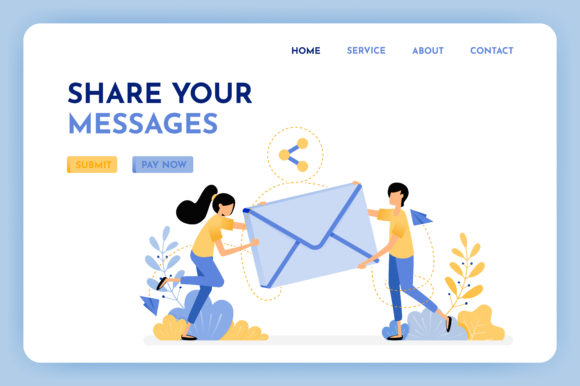
Design of Sharing and Sending Email
In a digital world where communication happens in milliseconds, the visual representation of our messages matters just as much as the text itself. Whether you are launching a new startup, updating your company’s website, or creating content for social media, the imagery you choose sets the tone for how your audience perceives your brand. One specific style that has gained significant traction among designers and marketers is the 3D envelope illustration. This design approach moves beyond flat, static icons to create depth, realism, and emotional connection.
The concept revolves around the idea of human connection through digital means. Imagine a scene where a woman and a man are holding a large, tactile 3D envelope between them. They aren't just sending data; they are engaging in a discussion, sharing ideas, and bridging the gap with the internet. This visual metaphor is powerful because it combines the warmth of personal interaction with the efficiency of modern technology. It transforms the abstract concept of "email" into something tangible, friendly, and accessible.
Why 3D Illustrations Stand Out
For years, web design relied heavily on flat vector graphics. While clean and efficient, these images can sometimes feel cold or generic. The shift toward 3D design brings a sense of playfulness and sophistication that captures attention immediately. When users see a high-resolution image of people interacting with a glowing, textured envelope, their brains register trust and engagement. This is particularly effective for landing pages where you need to convert visitors quickly.
The appeal lies in its versatility. A 3D email illustration isn't limited to tech companies. It works equally well for educational platforms, freelance portfolios, marketing agencies, and even personal blogs. By using characters—a man and a woman—you introduce relatability. Viewers can imagine themselves in those positions, whether they are receiving important news, collaborating with a colleague, or staying in touch with family. This emotional hook is what makes the design package so valuable for various projects.
Practical Applications Across Industries
Understanding where to use this asset is key to maximizing its potential. The description of this design package highlights its suitability for online and offline purposes, but let's break down exactly how different professionals can utilize it.
- Landing Pages and Websites: If you run a SaaS platform focused on communication tools, this illustration serves as a perfect hero image. It instantly communicates the core function—sending messages via the internet—without needing extensive copy. For small business owners, placing this on a "Contact Us" page adds a welcoming touch that encourages user interaction.
- Social Media Promotion: In the crowded feed of Instagram, LinkedIn, or Twitter, static images often get scrolled past. A vibrant, high-quality JPEG with 3D elements stands out. You can use it to announce a newsletter launch, promote an email marketing webinar, or simply share a tip about digital etiquette. The visual stops the scroll, prompting the user to read your caption.
- Marketing Materials and Ads: Whether you are designing a banner ad for Google Ads or a poster for a local event, clarity is crucial. This design encapsulates the entire message: connection, discussion, and digital delivery. Marketers can leverage this to boost click-through rates by associating their brand with clear, positive communication.
- Mobile App Interfaces (UI): User Interface designers know that icons need to be recognizable yet distinct. While the full illustration might be too large for a tiny button, elements from it can be extracted for app onboarding screens. Showing a user how to send their first message with a friendly 3D guide reduces friction and improves the user experience.
- Educational Content: Educators and bloggers writing about cybersecurity, digital literacy, or remote work collaboration can use these visuals to illustrate points. It makes dry topics feel more engaging and easier to digest for students or readers who may not be tech-savvy.
Technical Advantages for Creators
One of the most compelling reasons to choose this specific design package is its technical flexibility. The package includes an Editable EPS 10 file, which is a game-changer for designers who need to customize assets without starting from scratch. Unlike a standard JPEG, which is locked in its pixel arrangement, an EPS file allows you to change colors, resize elements, and adjust layouts while maintaining crisp quality at any scale.
This editability is crucial for branding consistency. If your company uses blue and white, you can easily modify the envelope or the characters' clothing to match your brand palette. Similarly, if you need to swap out the male character for a female one to better represent your diverse team, the editable layers make that possible. This saves hours of design time and ensures that the final output looks professional and tailored to your specific needs.
Additionally, the inclusion of high-resolution JPEGs ensures that the design looks sharp on all devices. From large monitor displays to mobile phone screens, the quality remains intact. This dual-format offering caters to both creative professionals who need source files and casual users who just want a ready-to-use image for a quick presentation or blog post.
Important Considerations Before Use
While this design package offers immense value, it is important to approach its usage thoughtfully. First, consider the context of your audience. If you are targeting a very conservative industry, such as finance or law, ensure that the playful nature of the 3D style aligns with your brand voice. Sometimes, a more subdued color scheme or a simpler composition might be preferred to maintain professionalism.
Secondly, always check the licensing terms associated with the download. Even though the package is designed for broad use across media ads, websites, and promotions, some creators retain certain rights regarding resale or redistribution. As a responsible user, understanding these boundaries protects both you and the original artist. The note "Thank you for downloading, it makes me better at work" suggests a supportive creator community; respecting their work fosters goodwill and ethical design practices.
Finally, think about accessibility. When using illustrations with characters, ensure that the alt text describing the image is accurate and inclusive. Screen readers rely on these descriptions to convey the meaning of visual content to visually impaired users. Describing the action—"Two people discussing over a digital email"—adds value and inclusivity to your project.
Conclusion
The Design of Sharing and Sending Email is more than just a pretty picture; it is a strategic tool for enhancing digital communication. By combining the universal symbol of the envelope with modern 3D aesthetics and human elements, it bridges the gap between technology and emotion. Whether you are a freelancer looking to polish your portfolio, a marketer aiming to boost campaign engagement, or an educator simplifying complex concepts, this versatile asset provides the visual language needed to connect with your audience effectively.
In an era where attention is scarce, making your communication channels look inviting and trustworthy is essential. This design package empowers you to do just that, offering high-quality, editable resources that adapt to your unique vision. By integrating these visuals into your web, social, and print materials, you are not just sending emails; you are fostering meaningful discussions and building stronger relationships in the digital space.