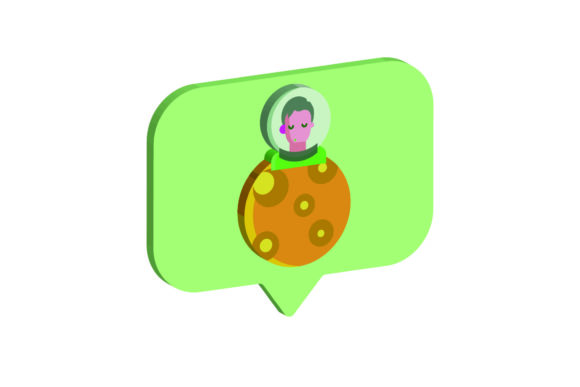
Elevating Digital Narratives: The Strategic Integration of 3D Icon Space Moon into Contemporary Design Ecosystems
In the rapidly evolving landscape of digital content creation, the distinction between functional utility and aesthetic immersion has never been more blurred. For professionals, creators, entrepreneurs, and marketers, the visual language employed in brand identity and user interface design serves as a critical touchpoint for consumer engagement. It is within this context that assets like the 3D Icon Space Moon emerge not merely as decorative elements, but as potent symbols of innovation, exploration, and futuristic sophistication. This article explores the multifaceted value of incorporating high-fidelity 3D space-themed iconography into modern workflows, examining how specific deliverables—such as the comprehensive six-file package including AI, EPS, SVG, DXF, JPG, and PNG formats—empower designers to meet the escalating demands of a visually driven market.
The Rise of Spatial Aesthetics in Digital Branding
The contemporary consumer is accustomed to hyper-realistic visuals, driven by advancements in gaming engines, augmented reality (AR), and virtual reality (VR) technologies. As a result, flat design, while still relevant, is increasingly being supplemented or replaced by depth-oriented graphics that offer a sense of tangibility. The 3D Icon Space Moon capitalizes on this shift. It represents a convergence of two powerful cultural currents: the enduring fascination with space exploration and the modern preference for three-dimensional, tactile interfaces.
For entrepreneurs and freelancers, utilizing such an asset signals a forward-thinking brand posture. Whether applied to a tech startup’s landing page, a marketing campaign for a new software product, or a lifestyle brand targeting early adopters, the moon icon serves as a universal shorthand for ambition, discovery, and boundary-pushing potential. It allows businesses to communicate complex values—innovation, global reach, and precision—through a single, well-crafted visual element. The relevance of this icon lies in its ability to anchor abstract concepts in a recognizable, yet aspirational, visual metaphor.
Technical Versatility: What You Get from the 6x Digital Files Package
One of the most significant barriers to adopting high-quality 3D assets in professional workflows is often technical compatibility. Designers frequently work across multiple platforms and require files that can be seamlessly integrated into various stages of production, from initial concept to final print. The inclusion of a comprehensive set of 6x Digital Files addresses this fragmentation directly, ensuring that the 3D Icon Space Moon is accessible regardless of the software environment or output medium.
This holistic approach to file delivery is crucial for maintaining consistency and efficiency. Below is a breakdown of how each format contributes to a streamlined creative process:
- AI File (Adobe Illustrator): Essential for vector-based editing. Professionals can manipulate the core structure of the 3D effect, adjust gradients, and modify shadows without losing resolution. This is ideal for large-scale branding projects where scalability is paramount.
- EPS File (Encapsulated PostScript): A legacy standard that ensures broad compatibility across different vector graphic applications. It is particularly useful when transferring designs between systems that may not support the latest proprietary formats, ensuring no data loss during handoffs.
- SVG File (Scalable Vector Graphics): The gold standard for web development. An SVG version of the 3D Icon Space Moon allows for crisp rendering on any screen size, from mobile devices to 4K monitors, while remaining lightweight and code-friendly. This is vital for responsive web design and interactive UI elements.
- DXF File (Drawing Exchange Format): Often overlooked in digital-only contexts, the DXF file opens the door to physical fabrication. For entrepreneurs involved in laser cutting, CNC routing, or vinyl cutting, this format allows the digital icon to be translated into physical merchandise, signage, or architectural models, bridging the gap between digital and physical marketing.
- JPG File (Joint Photographic Experts Group): A rasterized option that provides immediate visual feedback. It is perfect for quick previews, social media thumbnails, or integration into presentation decks where vector editing is unnecessary.
- PNG File (Portable Network Graphics): Featuring transparency support, the PNG file is indispensable for overlaying the moon icon onto various backgrounds. It preserves the intricate lighting and shading of the 3D effect, allowing it to sit naturally within composite designs.
By receiving these diverse formats, creators are not just buying an image; they are acquiring a versatile toolkit. This reduces the need for external conversion services, minimizes errors associated with format translation, and accelerates time-to-market for campaigns.
Meeting Changing Needs: Precision, Editability, and Workflow Efficiency
The modern creative workflow is characterized by agility and iteration. Clients and stakeholders expect rapid prototyping and customization. The statement that this design is "Easy to edit and use in your designs" speaks directly to this demand. In the past, integrating complex 3D icons required advanced modeling skills or expensive software licenses. Today, the availability of pre-rendered, editable vector files democratizes access to high-end aesthetics.
For freelancers and small agencies, time is the most valuable currency. The ability to tweak the color palette of the 3D Icon Space Moon to match a brand’s specific hex codes, or to adjust the intensity of the glow effects, allows for personalized branding without starting from scratch. This editability fosters a deeper connection between the designer and the final output, enabling nuanced adjustments that generic stock images cannot provide.
Furthermore, the specified canvas size of 1920px X 1280px offers a balanced aspect ratio that is highly adaptable. While traditionally associated with desktop resolutions, this dimension provides ample pixel real estate for detailed texturing and lighting effects, ensuring that the icon remains sharp even when scaled down for smaller interfaces or blown up for large-format prints. This attention to dimensional detail reflects a broader industry trend toward "resolution independence," where assets must perform flawlessly across all viewing contexts.
Strategic Applications Across Industries
The application of the 3D Icon Space Moon extends far beyond simple decoration. Its semantic weight allows it to function as a strategic tool in various sectors:
- Technology and SaaS: Software companies often use space imagery to denote cloud computing, data storage, or next-generation AI capabilities. The moon icon can symbolize the "new frontier" of digital services.
- Education and EdTech: Institutions focused on STEM (Science, Technology, Engineering, and Mathematics) can leverage the icon to inspire curiosity and academic excellence. It serves as a visual cue for learning about astronomy, physics, or engineering.
- Lifestyle and Wellness: In a counter-intuitive twist, the serene imagery of the moon is often used in wellness branding to evoke calm, night-time routines, or sleep optimization products. The 3D texture adds a premium feel, distinguishing these brands from minimalist competitors.
- Event Marketing: For conferences, hackathons, or product launches themed around innovation, the moon acts as a central motif. The availability of DXF files allows event organizers to create physical installations, such as moon-shaped photo booths or stage props, creating immersive experiences that drive social media sharing.
Future-Proofing Your Design Assets
As we look toward the future of digital interaction, the line between 2D and 3D will continue to dissolve. With the rise of WebGL and browser-based 3D rendering, static images are giving way to interactive elements. However, the foundational assets remain crucial. The 3D Icon Space Moon, provided in editable vector formats, ensures that designers are prepared for this transition. They can extract necessary components to build interactive scenes or use the high-resolution raster versions for static marketing materials today.
Moreover, the emphasis on sustainability in design—both in terms of energy consumption and resource usage—favors efficient workflows. By having all necessary formats in one download, designers reduce waste associated with trial-and-error sourcing and redundant file conversions. This practical efficiency aligns with the growing expectation for ethical and sustainable business practices.
Conclusion
The acquisition of the 3D Icon Space Moon is more than a purchase of a graphic; it is an investment in versatility, quality, and brand perception. By providing six distinct file formats tailored to different stages of the design and production pipeline, this asset empowers professionals to execute their visions with precision and speed. In an era where visual differentiation is key to success, leveraging high-quality, editable, and semantically rich assets like the 3D Space Moon allows creators to tell compelling stories that resonate with audiences across digital and physical realms. As industries continue to evolve, the ability to adapt and deploy such sophisticated visual tools will remain a competitive advantage for those who seek to lead rather than follow.
Thank you for considering this essential addition to your design repertoire. Embrace the depth, clarity, and strategic potential of the 3D Icon Space Moon to elevate your projects to new heights.