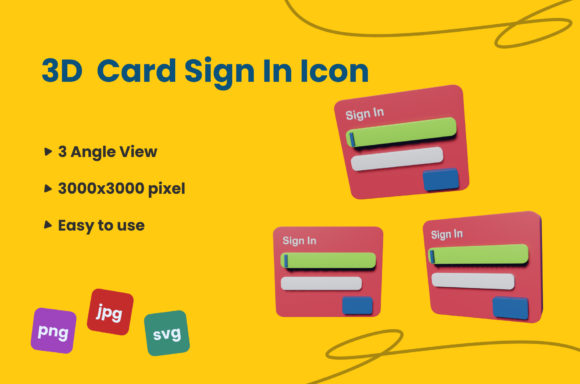
Elevating User Experience with 3D Card Sign-In Icons: A Comprehensive Design Guide
In the rapidly evolving landscape of digital interface design, first impressions are everything. When a user lands on a website or opens a mobile application, their subconscious brain processes visual cues in milliseconds. Among these cues, few elements are as critical as the entry point—the sign-in button or icon. While text labels like "Log In" are functional, they often lack emotional resonance. This is where high-fidelity visual assets come into play. Specifically, the 3D Card Sign-In Icon has emerged as a powerful tool for designers seeking to blend modern aesthetics with intuitive usability.
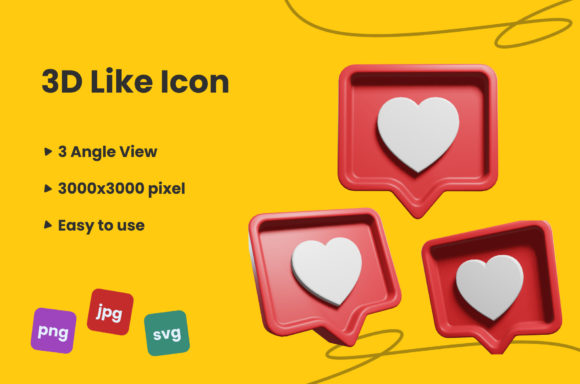
This article explores the significance of using premium, multi-format 3D icons, such as those available from Silenic Co, and explains why investing in high-quality graphic assets can transform a standard user interface into an engaging digital experience.
The Psychology of Depth: Why 3D Icons Work
To understand the value of a 3D card sign-in icon, we must first look at how humans perceive depth. For years, flat design dominated the tech world, prioritizing minimalism and speed. However, recent trends have seen a resurgence of skeuomorphism and 3D elements, driven by advancements in WebGL and CSS rendering. These deeper visuals trigger a psychological response related to tangibility. A 3D icon that resembles a physical card suggests reliability, security, and solidity—qualities users desperately seek when entering personal credentials.
When you use a high-quality image featuring realistic lighting, shadows, and textures, you create a sense of affordance. The icon doesn't just say "click here"; it invites interaction. It looks touchable. This subtle nudge can reduce friction in the user journey, making the sign-in process feel less like a chore and more like a seamless part of the overall narrative.
Understanding File Formats: JPG, PNG, and SVG Explained
One of the most common challenges designers face is selecting the right file format for their project. Many resources offer generic images, but professional-grade assets provide specific formats tailored to different technical needs. Let’s break down the three primary formats often associated with premium 3D icons, such as the 3000×3000 pixel variants offered by creators like Silenic Co.
JPG Files: The Standard for Web Display
JPG (Joint Photographic Experts Group) files are ubiquitous in web design due to their efficient compression algorithms. If you are embedding a 3D card icon into a hero section of a landing page or using it as a thumbnail, a JPG is often the go-to choice. It supports millions of colors, which is essential for capturing the gradients and lighting effects inherent in 3D renders. However, JPGs do not support transparency. If your background is complex or patterned, a white box around your icon might ruin the aesthetic.
PNG Files: Precision and Transparency
The PNG (Portable Network Graphics) format is a favorite among UI/UX designers for its ability to handle transparency. When you download a 3D card sign-in icon in PNG format, you ensure that the background of the icon blends perfectly with your website’s theme. Whether your site uses a dark mode, a vibrant gradient, or a busy photographic background, the PNG allows the 3D element to float seamlessly without harsh borders. The 3000×3000 pixel resolution ensures that even if you scale the icon up for large displays, it remains crisp and free of pixelation.
SVG Files: The Scalability Champion
While many 3D renders are raster-based (pixels), some advanced assets or vectorized versions are available in SVG (Scalable Vector Graphics). SVGs are mathematical representations of shapes rather than grids of pixels. This means they can be scaled to any size—from a tiny favicon to a massive billboard—without losing quality. For a 3000×3000 pixel asset, an SVG version offers unparalleled flexibility. You can also manipulate the code directly to change colors or apply CSS animations, adding an interactive layer to your static design. Using an SVG demonstrates a commitment to performance and accessibility, as these files are lightweight and load quickly.
The Importance of High Resolution and Quality
Why does resolution matter? In the era of Retina displays and 4K monitors, low-resolution graphics look blurry and unprofessional. A 3000×3000 pixel dimension provides a generous canvas. It allows designers to crop, zoom, and adapt the icon for various devices without compromising clarity. This level of detail is particularly important for 3D designs, where light reflections and surface textures need ample data to render correctly.
High-quality images also signal trust. Users subconsciously associate polished visuals with secure platforms. A pixelated or stretched sign-in button can make a financial app or e-commerce store appear sketchy. Conversely, a sharp, beautifully rendered 3D card icon reinforces the brand’s attention to detail and dedication to user satisfaction.
Practical Applications in Modern Design
So, how can you practically utilize these assets? Here are several scenarios where a 3D card sign-in icon adds significant value:
- Landing Pages: Use the icon prominently near the call-to-action (CTA) to guide the user’s eye toward the login form.
- Mobile App Onboarding: During the initial setup screens, a 3D icon can serve as a friendly mascot, welcoming new users and simplifying the authentication step.
- Email Newsletters: Embedding a small version of the icon in email headers can reinforce brand consistency and encourage clicks back to your platform.
- Social Media Graphics: Create engaging posts that highlight security features or login tips, using the icon as a central visual anchor.
Furthermore, these icons are not limited to desktop interfaces. With the rise of augmented reality (AR) and virtual environments, 3D assets are becoming increasingly relevant. A designer working on a metaverse project or a VR dashboard will find that vector-based or high-res 3D icons integrate naturally into spatial computing environments.
Choosing the Right Designer and Asset Source
Not all icons are created equal. When searching for resources, it is crucial to look for creators who prioritize quality and versatility. Consider the work of Silenic Co, a provider known for delivering detailed, high-resolution designs. Their offerings, such as the 3D Card Sign-In Icon, are designed with the end-user in mind. By providing multiple formats (JPG, PNG, SVG) at a high resolution (3000×3000 pixels), they empower designers to maintain consistency across all touchpoints.
When evaluating a design asset, ask yourself:
- Is it easy to use? Does the package include clear instructions or layers?
- Is it versatile? Can it adapt to different color schemes and backgrounds?
- Is it original? Unique designs help your brand stand out in a crowded market.
Supporting independent designers and specialized stores ensures that you get assets crafted with care, rather than generic clip-art that dilutes your brand identity. Following designers and checking their stores for more designs can lead to discovering cohesive design systems that streamline your workflow.
Best Practices for Implementation
Once you have downloaded your chosen icon, proper implementation is key. Here are some tips to ensure your 3D card sign-in icon shines:
Contrast is King: Ensure the icon stands out against your background. If your site is dark, use a lighter version of the icon, or vice versa. Proper contrast improves accessibility for visually impaired users.
Consistent Lighting: If your website uses other 3D elements, try to match the lighting direction. An icon with shadows falling to the left will look jarring next to an element with shadows falling to the right.
Responsive Scaling: Test your icon on various screen sizes. A 3000×3000 pixel file is great for source material, but you should serve appropriately sized versions to mobile users to optimize load times.
Conclusion
In conclusion, the choice between a simple text link and a 3D Card Sign-In Icon is more than just an aesthetic preference; it is a strategic decision that impacts user engagement, trust, and brand perception. By leveraging high-quality, multi-format assets, designers can create interfaces that are not only functional but also emotionally resonant.
Whether you choose a JPG for broad compatibility, a PNG for transparency, or an SVG for scalability, the goal remains the same: to provide a seamless, enjoyable user experience. As technology continues to advance, the demand for rich, immersive visuals will only grow. Investing in premium design resources, such as those provided by Silenic Co, is an investment in the future of your digital presence. Thank you for visiting this design overview. If you liked this design and found this guide helpful, consider following the creator and checking their store for more innovative designs. Regards, Silenic Co 2021.