3D Layered Halloween Pumpkin Cut File
The transition from a flat digital design to a tangible, dimensional craft project requires precision, planning, and the right technical assets. For creators, small business owners, and hobbyists looking to elevate their seasonal offerings or personal decor, the 3D Layered Halloween Pumpkin Cut File offers a sophisticated solution that bridges the gap between simple paper crafts and complex woodworking or resin projects. Unlike standard single-layer decals, this specific file type is engineered to create depth, shadow, and visual interest by stacking multiple distinct layers on top of one another. Understanding how to integrate these files into your production workflow—from initial design selection to final assembly—is crucial for achieving professional-grade results.
Understanding the Technical Architecture of Layered SVGs
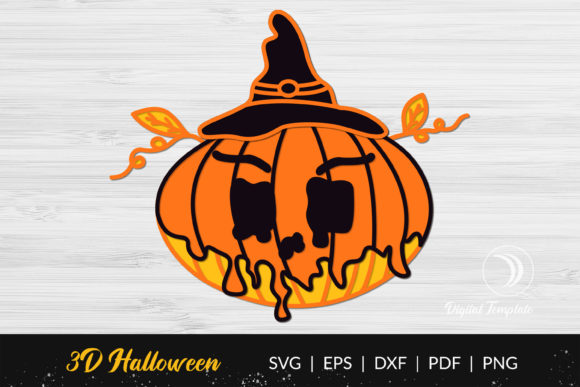
At its core, a 3D layered cut file is not merely an image; it is a structural blueprint. The design consists of four distinct layers that stack to form a cohesive three-dimensional object. When you purchase or download this asset, you are receiving a compressed package designed to maximize compatibility across various software ecosystems. The inclusion of a ZIP file containing grouped formats ensures that whether you are using industry-standard vector software or basic cutting machine interfaces, the data remains intact and usable.
The versatility of the provided file types—AI, SVG, EPS, DXF, PDF, and PNG—means that the asset can be integrated into almost any digital-to-physical workflow. For instance, designers working in Adobe Illustrator will appreciate the AI file, which keeps all layers stacked in a single document for easy editing. Conversely, users of Cricut Design Space or Silhouette Studio often prefer the individual SVG or DXF files, which allow for precise control over each layer’s position, color, and material during the cutting process. This flexibility is essential for professionals who need to adapt designs for different client requests or material constraints without losing the integrity of the original artwork.
Workflow Integration: From Digital Asset to Physical Product
Implementing a 3D layered pumpkin design requires a shift in mindset from flat printing to spatial construction. The process begins with preparation. Before sending any files to a cutter, it is vital to organize the layers logically. Most layered designs come with a specific stacking order, typically starting with the largest background layer and moving inward to the smallest detail. Disrupting this order can result in a misaligned final product where shadows do not fall correctly or structural elements fail to interlock properly.
For entrepreneurs running print-on-demand businesses or Etsy shops, efficiency is key. By utilizing the pre-grouped files, you reduce the time spent manually separating vectors. However, quality control remains a critical step. Always perform a "print preview" or virtual cut simulation in your design software before committing to expensive materials like cardstock, vinyl, or basswood. Check for overlapping lines or tiny details that might be too fragile for the chosen material thickness. A common pitfall in layered crafting is ignoring the physical thickness of the material itself; when stacking four layers, even a slight variance in material density can cause the structure to bow or become unstable.
Selecting the Right Materials for Dimensional Impact
The success of a 3D layered design is heavily dependent on material choice. The 3D Layered Halloween Pumpkin Cut File is designed to work with a variety of media, but each medium presents different challenges:
- Cardstock and Paper: Ideal for lightweight decorations, greeting cards, or scrapbooking. Use heavier weight paper (65lb or higher) to prevent warping when layers are glued together. This is cost-effective for high-volume production.
- Vinyl: While primarily used for decals, thick adhesive vinyl can be used for layered wall art. However, the lack of rigidity means the layers may not stand independently without a backing board.
- Basswood or Plywood: For a premium look, laser-cutting these layers from wood creates a stunning, durable piece. The DXF and SVG files are optimized for laser engravers and CNC routers, allowing for clean cuts and minimal sanding requirements.
- Felt and Foam: These soft materials add texture and warmth, making them perfect for nursery decor or plush-style crafts. The individual layer files allow you to mix and match colors to create custom palettes.
Optimizing for Cutting Machines and Printers
Compatibility is a major selling point of this file set. Because it includes formats for both cutting machines and standard printers, it supports a hybrid workflow. You can use the PNG files for direct printing on inkjet or laser printers if you are creating paper-based crafts that do not require intricate internal cuts. Alternatively, the DXF and SVG files are native to most modern cutting plotters, including those from Cricut and Silhouette.
When preparing files for a Cricut or Silhouette machine, pay attention to the line weights and cut settings. The four layers should be assigned to separate mat pages or arranged on a single mat with clear spacing to avoid accidental double-cuts. If you are using the "Stacked" versions of the files (where all layers are combined into one graphic), ensure your software allows you to ungroup and separate them by color or layer name before cutting. This separation is necessary because each layer may require a different blade pressure or speed setting depending on the material.
For educators and classroom managers, this file offers a practical tool for teaching geometry and spatial reasoning. Students can physically manipulate the layers to understand concepts of depth, perspective, and assembly. The PDF version is particularly useful here, as it can be printed directly onto cardstock for immediate hands-on activity without needing specialized cutting software installed on school computers.
Strategic Use Cases for Creators and Marketers
Beyond the craft table, the 3D Layered Halloween Pumpkin Cut File serves strategic purposes in marketing and branding. Small business owners can leverage these designs to create unique packaging inserts, thank-you tags, or window displays that stand out in a crowded marketplace. The dimensional aspect captures attention more effectively than flat graphics, increasing engagement and brand recall.
In the realm of content creation, bloggers and influencers can use these files to produce high-quality tutorial videos. Demonstrating the assembly process of a 3D layered pumpkin provides valuable content that resonates with audiences interested in DIY projects. By offering the underlying files as a freebie or part of a paid bundle, creators can drive traffic to their sites and build email lists. The inclusion of multiple file formats ensures that the resource appeals to a broad spectrum of skill levels, from beginners who rely on pre-cut kits to advanced users who modify vectors for custom projects.
Long-Term Value and Organization
Investing in well-structured digital assets pays off in long-term usability. The ZIP file format, with its organized grouping by file type, simplifies digital inventory management. For freelancers and agencies managing multiple client projects, having a library of versatile, multi-format assets reduces administrative overhead. Instead of converting files repeatedly, you can instantly access the correct format for your current toolchain.
Furthermore, the timeless nature of the Halloween pumpkin motif ensures that these files remain relevant year after year. Unlike trend-dependent designs, seasonal staples like pumpkins have enduring appeal. By mastering the implementation of 3D layered techniques, you develop a transferable skill set applicable to other holiday designs, such as Christmas trees, Easter bunnies, or Thanksgiving turkeys. This scalability allows you to expand your product line efficiently, using the same technical workflow for new creative inputs.
In conclusion, the 3D Layered Halloween Pumpkin Cut File is more than just a decorative template; it is a comprehensive tool for efficient, high-quality production. By understanding its technical components, respecting the assembly hierarchy, and selecting appropriate materials, creators can transform a simple digital download into a compelling physical experience. Whether you are streamlining your small business operations, enhancing your educational curriculum, or simply pursuing a rewarding creative hobby, this asset provides the structural foundation needed to bring your vision to life with clarity and precision.